Here's a thinking process:
1. **Analyze User Input:**
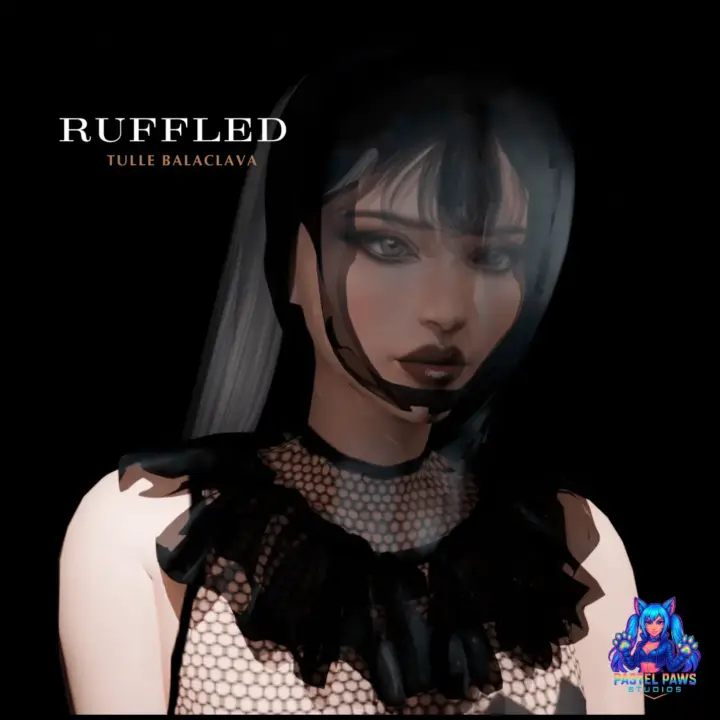
— **Input Text:** "A sheer tulle balaclava finished with dramatic ruffles. Perfect for gothic couture, editorial fashion, masquerades, fantasy styling, and elegant alternative looks."
— **Task:** Translate to Russian.
— **Constraints:**
— Keep meaning, facts, names, numbers, game versions.
— No new facts, ads, ratings, or explanations.
— Write naturally and concisely.
— No Markdown.
— Return only the final Russian text without quotes or comments.
2. **Identify Key Elements:**
— "sheer tulle balaclava" -> прозрачная тюлевая балаклава / кружевная тюлевая балаклава (sheer = прозрачная/полупрозрачная)
— "finished with dramatic ruffles" -> отделанная драматичными/выразительными оборками
— "Perfect for gothic couture, editorial fashion, masquerades, fantasy styling, and elegant alternative looks." -> Идеально подходит для готической высокой моды, редакционной/журнальной моды, маскарадов, фэнтези-образов и элегантных альтернативных стилей.
3. **Draft Translation (Mental):**
Прозрачная тюлевая балаклава с выразительными оборками. Идеально подходит для готической высокой моды, журнальных съемок, маскарадов, фэнтези-образов и элегантных альтернативных стилей.
4. **Refine according to Constraints:**
— Check accuracy: "sheer tulle" -> прозрачный тюль. "dramatic ruffles" -> выразительные/драматичные оборки. "editorial fashion" -> в контексте моды обычно "журнальная мода" или "модные съемки". I'll use "журнальных образов" or "модных съемок". Let's stick closer to the original: "редакционной моды" is too literal. "Журнальных образов" or "модных фотосессий" works. I'll go with "модных съемок".
— "gothic couture" -> готической высокой мод